

Binnacle Mitigation & Restoration
Biohazard Cleanup
Safe. Discreet. Certified. Handled with professionalism and compassion.
Overview
What You Need to Know
Biohazard situations encompass a range of circumstances involving biological materials that pose a health risk: trauma and crime scenes with blood and bodily fluids, unattended deaths discovered days or weeks after occurrence, hoarding situations involving animal waste or decomposition, sewage backups with Category 3 water contamination, and infectious disease decontamination. Each situation requires specialized training, appropriate PPE, regulated disposal protocols, and a level of professionalism that goes beyond standard property cleaning.
The regulatory framework governing biohazard work is specific and non-negotiable. OSHA's Bloodborne Pathogen Standard (29 CFR 1910.1030) mandates training, PPE requirements, exposure control plans, and medical surveillance for any work involving potential bloodborne pathogens including HIV, Hepatitis B, and Hepatitis C. Biohazard waste must be disposed of through licensed medical waste transporters and cannot be placed in standard dumpsters or landfills. Property owners who attempt cleanup without compliance face legal liability exposure in addition to health risk.
Binnacle contractors understand that biohazard situations are never just property incidents. They involve real people navigating some of the most difficult circumstances of their lives. Our response combines technical precision with genuine compassion. We use unmarked vehicles by default, communicate discreetly, and work as quickly as safety protocols allow. Our goal is to return the property to a safe, habitable condition while respecting the privacy and dignity of everyone involved.
Key Facts
- 29 CFR 1910.1030 OSHA bloodborne pathogen standard governs all trauma and biohazard work
- Regulated Disposal biohazard waste must be disposed through licensed medical waste carriers, not standard dumpsters
- Often Covered homeowner's and commercial property insurance often covers biohazard cleanup costs
- Fully Discreet unmarked vehicles used by default for neighbor-level discretion on every job
Our Process
Step-by-Step Restoration
Scene Assessment
Trained contractors assess the scope of contamination using proper PPE before any work begins. All affected areas are identified, including secondary spread through flooring, subfloor, and HVAC. Scope of work and disposal plan are established before crew mobilization.
PPE & Containment
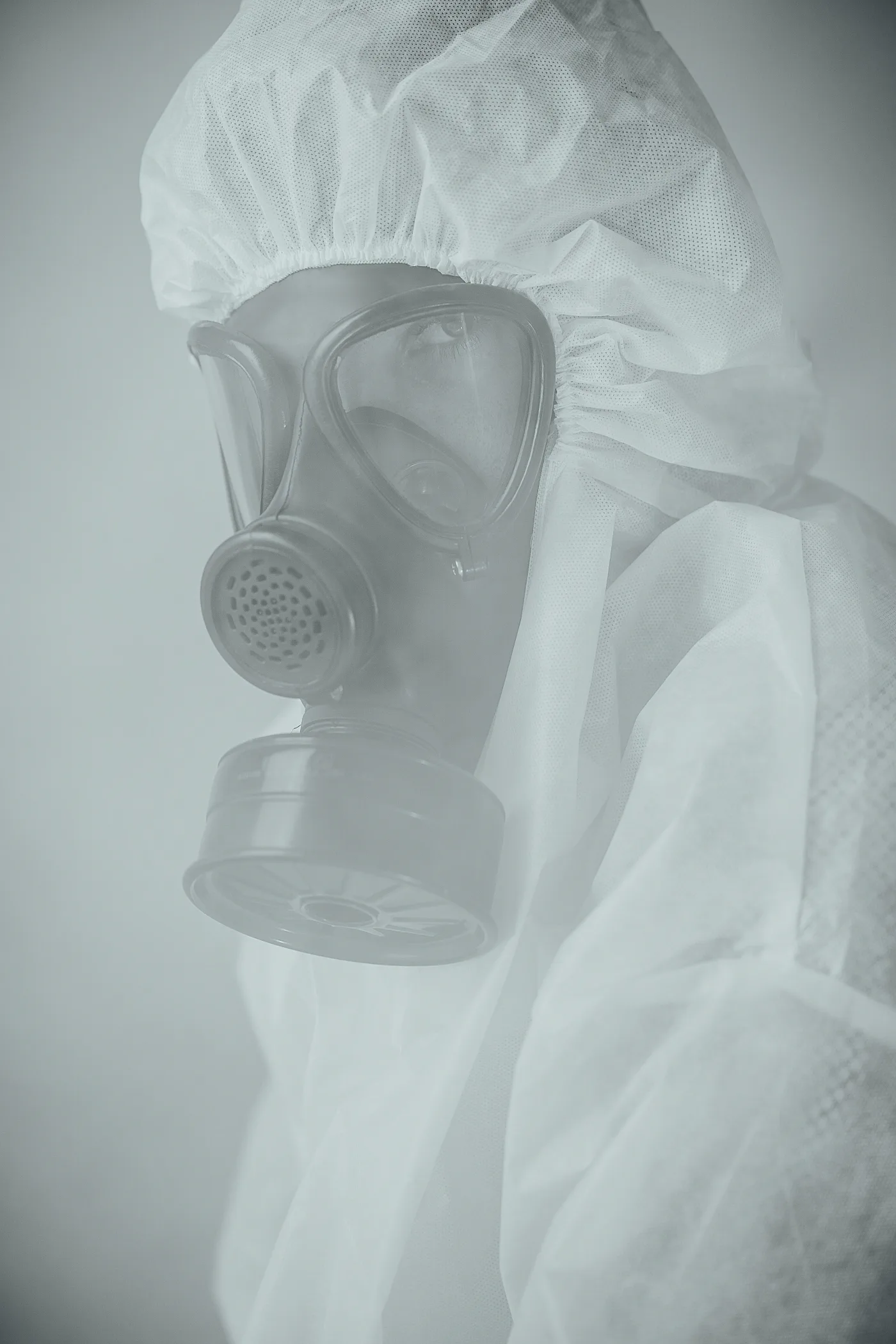
Full PPE is donned before entering the contaminated area: Tyvek suits, nitrile gloves, full-face respirators with appropriate filters, and boot covers. Containment barriers prevent cross-contamination to unaffected areas of the property during the project.
Removal & Disposal
Contaminated materials, including porous materials that cannot be adequately decontaminated, are removed and placed in approved biohazard containers. Regulated medical waste is transported by a licensed carrier to a permitted disposal facility. No contaminated material leaves in standard waste containers.
Decontamination
All affected surfaces are cleaned and decontaminated using hospital-grade, EPA-registered disinfectants effective against bloodborne pathogens. Multiple cleaning passes are completed. Hard-to-reach areas including subfloor gaps and wall cavities are addressed with specialized application equipment.
Air Quality Testing
HEPA air scrubbers run throughout and after decontamination. Where indicated, air quality testing confirms that airborne biological particulate is within safe limits before the area is cleared for re-occupancy.
Documentation & Closeout
A complete project record is provided including scope of work, materials removed, disposal manifests from the licensed medical waste carrier, and decontamination confirmation. This documentation supports insurance claims and provides legal protection for property owners.
Common Questions
What to Expect & How It Works
What qualifies as a biohazard cleanup situation?
A biohazard cleanup situation involves any material that poses a biological health risk requiring specialized handling and disposal. This includes: trauma scenes with blood or bodily fluids (whether from accidents, violence, or medical events), unattended or undiscovered deaths where decomposition has occurred, hoarding situations with animal waste, rodent infestations, or decomposition, sewage backups classified as Category 3 water contamination, and spaces contaminated with infectious biological material. If you are uncertain whether a situation qualifies, erring on the side of professional assessment is always the right approach, as exposure to bloodborne pathogens can occur without visible contamination.
Is biohazard cleanup covered by insurance?
Many homeowners and commercial property insurance policies do cover biohazard cleanup costs, though coverage specifics vary by policy and situation. Trauma scene cleanup resulting from an accident is typically covered under the property damage provisions. Crime scene cleanup may be covered depending on policy language. Some policies have specific riders for biohazard events. Binnacle contractors provide complete, itemized documentation of all work performed, formatted to support insurance claims with major carriers. We recommend calling your carrier early in the process to understand your coverage, and our team can assist with documentation requirements.
How discreet is the biohazard cleanup process?
Binnacle contractors use unmarked vehicles by default for all biohazard jobs. Our team communicates discreetly with property owners and avoids any signage, markings, or behaviors that would draw neighbor attention to the nature of the work. We schedule work at times that minimize visibility when requested, and our team is trained to interact professionally and compassionately with family members and neighbors who may be present. We understand that privacy matters deeply in these situations, and discretion is built into our standard operating procedure. You never have to ask for it.
How long does biohazard cleanup take?
The timeline for biohazard cleanup depends on the size of the affected area, the extent of contamination, and whether porous materials requiring removal are involved. A contained blood cleanup event in a single room might be completed in 4 to 8 hours. An unattended death situation with decomposition and subfloor involvement can require 1 to 3 days of remediation work. Hoarding situations are project-dependent and can range from 1 to several days. After the initial assessment, Binnacle provides a timeline estimate so property owners can make arrangements for access and re-occupancy planning.
Why Speed Matters
The Cost of Waiting
Every hour without professional mitigation increases damage severity and final restoration cost. Here's what happens when response is delayed:
Untrained individuals who enter contaminated areas without PPE face real exposure risk to bloodborne pathogens including HIV, Hepatitis B, and Hepatitis C, which can survive outside a host for days under certain conditions.
Biological material begins to penetrate porous materials, including flooring, subfloor, and drywall. Odor intensifies. Delayed response significantly increases the scope of material removal required.
Decomposition compounds penetrate deeply into structural materials, requiring more extensive demolition and replacement. Microbial growth including mold begins on affected organic surfaces.
Improper disposal of biohazard waste carries legal liability for property owners. Insurance claims become harder to document retroactively. Resale and occupancy become legally complicated without clearance documentation.
Certifications & Standards
Industry-Certified Work
- OSHA 29 CFR 1910.1030: Bloodborne Pathogen Standard. Governs training, PPE, exposure control, and waste disposal requirements for all biohazard work.
- EPA regulations for medical waste disposal. All biohazard waste transported and disposed of by licensed carriers with legal manifests.
- IICRC S700: Standard for Professional Fire and Smoke Damage Restoration. Applied to biohazard scenes that overlap with fire or smoke contamination.
- DOT HazMat regulations. Applicable to transport of regulated medical waste.
- State-specific medical waste handling requirements for Missouri, Iowa, and Oklahoma
Equipment Used
Professional-Grade Tools
- Full-face respirators with P100/OV filters: OSHA-required respiratory protection for bloodborne pathogen work
- Tyvek chemical-resistant suits and nitrile gloves: complete barrier protection for technicians
- HEPA air scrubbers: captures airborne biological particulate throughout and after decontamination
- Approved biohazard containers and red bags: OSHA-compliant containment for regulated medical waste
- Hospital-grade EPA-registered disinfectants: effective against HIV, Hepatitis B/C, MRSA, and other pathogens
- Ozone generators: post-decontamination odor treatment for severe decomposition events
- Moisture meters and thermal cameras: identifies biological material that has penetrated into structural assemblies
- ATP bioluminescence testing: quantitative surface verification of decontamination effectiveness
Why Binnacle
What Sets Us Apart
- OSHA 29 CFR 1910.1030 bloodborne pathogen trained and equipped technicians
- Full PPE on every job: Tyvek suits, full-face respirators, and nitrile gloves
- Hospital-grade EPA-registered disinfectants effective against all bloodborne pathogens
- Licensed medical waste transport and disposal with legal manifests provided
- Unmarked vehicles by default for neighbor-level discretion on every job
- HEPA air filtration running throughout all phases of decontamination
- Trauma, crime scene, and unattended death certified
- Sewage and Category 3 water events handled under same biohazard protocols
- Insurance documentation package supports claims with major carriers
- 24/7 discreet response across Missouri, Iowa, and Oklahoma
Emergency Guides
What To Do Right Now
In one of these situations? Start here for the first steps — then call us 24/7.
Ready When You Are
Get Expert Help Now
Certified contractors standing by 24/7 across Missouri, Iowa, and Oklahoma. Fast response. Full documentation. Insurance-ready.